







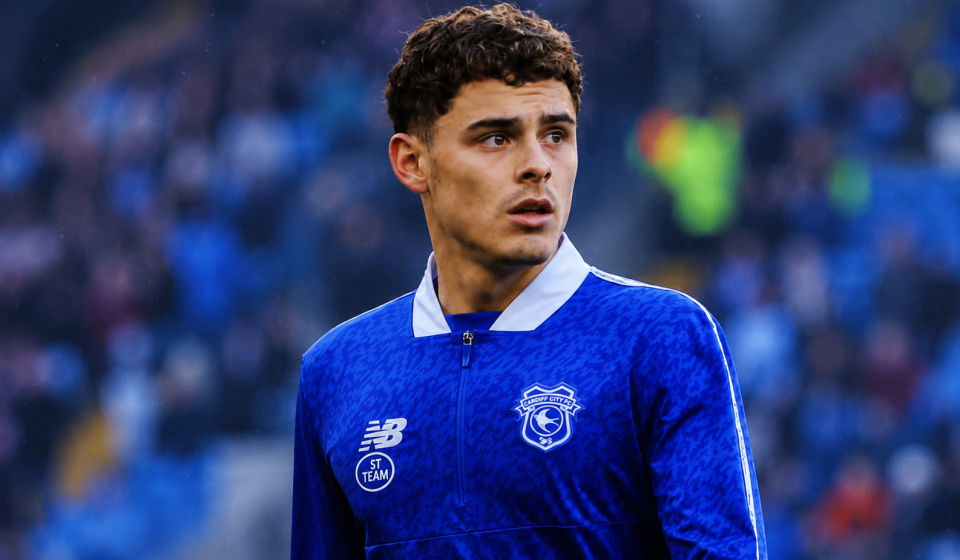

Football careers rarely follow a straight road. Some players grow up in one country, develop in another and eventually represent a national team connected to their family. Alex Robertson is a particularly interesting example.
Born in Dundee, Scotland, in 2003, the midfielder grew up largely in Australia before moving to England as a young footballer. His journey has taken him through youth football in Sydney, Manchester United, Manchester City, Ross County, Portsmouth and eventually Cardiff City. Along the way, he also faced an unusual international decision because he had links to several countries.
Today, he is an Australian international and a Cardiff City midfielder. His story is about much more than transfers and statistics. It is about development, family influence, difficult choices and the challenge of turning early promise into a successful professional career.
Early Life and Family Background
A football family from the beginning
Alexander Sean Pablo Robertson was born on April 17, 2003, in Dundee, Scotland. Although Scotland was his birthplace, Australia became an important part of his childhood. His father, Mark Robertson, was a professional footballer and represented Australia at senior level.
That family connection had a major influence on the young midfielder. His grandfather, also named Alex, had an association with Australian football as well, meaning the family connection with the Socceroos stretched across generations. Robertson eventually became a third-generation Australian international himself.
His mother is Peruvian, while his father is Australian. Because of his background and where he lived, Robertson had connections to Australia, Peru, Scotland and England. That unusual mixture would later become one of the most talked-about parts of his international career.
Rather than growing up entirely within the English football system, he spent part of his childhood in Sydney. His early years in Australia helped shape his relationship with the country he would eventually choose to represent.
A childhood surrounded by sport
Robertson’s introduction to sport was not limited to football. His family encouraged physical activity from a young age, and he was involved with rugby league and gymnastics before fully concentrating on football.
That background may have helped him develop coordination and balance. In midfield, those qualities can be valuable because players often need to turn quickly, protect possession and maintain control when opponents are closing them down.
His early football experience included Pagewood Botany, Maroubra United and Hakoah Sydney City East. His father was also involved in football development, giving Robertson an environment in which the game was part of everyday life.
Moving From Australia to England
The major turning point
A major change came when Robertson was still a teenager. His talent attracted attention from clubs in England, including Manchester United.
In 2015, he trialled with Manchester United, and his family moved to England to support his football development. FIFA regulations created complications around his ability to participate in organised youth football at the time, so his development was not simply a case of walking into an academy and playing matches.
Instead, he had to continue training and maintaining his fitness while the situation was worked out. His father played an important role during this period.
That experience illustrates something many young players and their families discover: talent alone does not guarantee a smooth path. Football development can involve regulations, relocation, education, injuries and difficult decisions away from the pitch.
Robertson spent around two years with Manchester United before moving to Manchester City.
Joining Manchester City’s academy
Manchester City became one of the most important stages of Robertson’s development.
The club had built a reputation for developing technically gifted players, and Robertson progressed through its youth system. His performances began attracting attention beyond the academy.
He was especially productive at youth level during the 2020–21 campaign. FBref records him making 14 Premier League 2 appearances that season, with two goals and an assist.
The numbers themselves tell only part of the story. His technical ability and maturity in midfield were what made him interesting to coaches and observers.
Imagine a young tree growing in a carefully managed garden. The academy provides the water, sunlight and protection, but eventually the tree has to survive outside that garden. For Robertson, the next challenge was senior football.
Playing Style and Strengths
A technically gifted midfielder
Robertson primarily operates in central midfield, although he can perform different roles depending on the team’s tactical needs. Current player databases list him as a central midfielder, with the ability to contribute in attacking or deeper midfield positions.
One of his notable qualities is his technical comfort on the ball.
A midfielder often has only a second or two to make a decision. Should he pass forward? Turn away from pressure? Carry the ball? Slow the game down? Robertson’s development has involved learning how to make those decisions against increasingly experienced opponents.
His right foot is his preferred foot, and his ability to operate centrally gives coaches flexibility.
More than just a passer
It would be easy to describe a young midfielder simply as a passer, but professional football demands much more.
A modern central midfielder may need to:
- Receive the ball under pressure
- Move possession through midfield
- Support attacking moves
- Help his team retain control
- Track opponents
- Make runs into dangerous areas
- Defend when possession is lost
- Adapt to different tactical systems
Robertson’s career has given him experience in several of these areas.
His time with Portsmouth was especially useful because it moved him away from academy football and into the demands of a competitive senior team.
The First Taste of Senior Football at Ross County
Learning the realities of professional football
In the 2021–22 season, Robertson joined Scottish Premiership club Ross County on loan from Manchester City.
It was an important step because senior football is very different from academy football.
Young players can dominate youth matches because of their technical ability, but senior opponents are stronger, more experienced and often less forgiving. A midfielder who holds the ball for too long at youth level might lose possession immediately against an experienced professional.
Robertson made three league appearances for Ross County according to career records.
Although the spell did not produce huge numbers of appearances, it was still valuable exposure.
Every minute in senior football can teach a young player something. Sometimes the lesson is tactical. Sometimes it is physical. Sometimes it is simply learning how to deal with the pressure of playing against adults who are fighting for points and professional contracts.
Manchester City and the Search for First-Team Football
Training among elite players
Robertson remained part of Manchester City’s system after returning from Scotland.
He became a regular contributor to the club’s development side and continued to attract attention. Manchester City’s own reports highlighted his performances for the Elite Development Squad, including his goal contributions during the 2022–23 campaign.
He also reached the stage where he was being included around Manchester City’s senior matchday environment.
That is significant.
Being around a club’s first team does not necessarily mean a young player is ready to become a regular Premier League starter. Manchester City had an exceptionally competitive squad, and breaking into that midfield was an enormous challenge.
For a young player, there can be a difficult decision at this point: remain at an elite club and compete for opportunities, or move elsewhere to receive regular senior minutes.
Robertson eventually chose the second route.
Portsmouth: The Breakthrough Loan
A move that changed his career
In 2023, Robertson joined Portsmouth on a season-long loan for the 2023–24 campaign.
The move was designed to provide him with regular first-team football, and it proved to be an important stage of his development. The Australian national team’s official website described him as a technically gifted midfielder who was looking for greater senior experience.
At Portsmouth, he became an important member of the team.
Manchester City reported that he had made 23 appearances in all competitions at the time and had established himself as one of Portsmouth’s regular players. Manager John Mousinho praised his performances and development.
Robertson finished the campaign with 27 appearances in all competitions, one goal and four assists according to the Socceroos’ account of his subsequent transfer.
Promotion added another chapter
Portsmouth’s season ended with promotion to the Championship.
For Robertson, this was an excellent learning experience. He was no longer simply a highly rated academy prospect. He had contributed to a senior side involved in a promotion race.
That experience mattered because successful professional football is about consistency, not just flashes of talent.
A player can look spectacular in one match. The bigger test is whether he can perform week after week, handle physical challenges and remain mentally prepared throughout a long season.
Choosing Australia Over Other Nations
An unusual international situation
Robertson’s international career has been one of the most fascinating parts of his story.
Because of his birth, family background and residence, he had connections to several national teams. He had represented both Australia and England at youth level, while Scotland and Peru were also connected to his eligibility.
That meant his international future was not straightforward.
For many footballers, choosing a national team is simple. They grow up in one country, represent that country at youth level and eventually progress into the senior side.
Robertson had several possible routes.
In March 2023, he accepted an opportunity with Australia and received his first senior call-up. The decision was especially meaningful because of his family’s history with the Socceroos.
Making His Australia Debut
Following in his family’s footsteps
Robertson made his senior Australia debut against Ecuador on March 24, 2023.
He came off the bench in Australia’s 3–1 victory in Sydney. In doing so, he joined his father and grandfather as an Australian international. Manchester City described the moment as a childhood dream coming true for the young midfielder.
His second appearance came against Argentina in June 2023. The match gave him another opportunity to experience international football against one of the world’s strongest sides.
International football can be very different from club football.
At club level, players train together every day. At international level, teammates may have only a few days to prepare for a match. The tactical instructions can be different, the pressure can be enormous and every appearance carries national significance.
For Robertson, those first matches represented another step in his transition from promising youngster to established professional.
The Move to Cardiff City
From Manchester City prospect to permanent professional
After his successful spell with Portsmouth, Robertson made another important career move.
In August 2024, he joined Cardiff City on a permanent deal from Manchester City. The agreement was reported as a four-year contract, with the transfer fee undisclosed.
The move represented an important change.
Manchester City had been the elite academy environment where Robertson developed. Cardiff offered something different: the opportunity to establish himself at a club where his performances could become a central part of his professional identity.
According to current player information, Robertson remains with Cardiff City and wears the number 18 shirt. His contract is listed through June 2028.
Developing through regular football
The 2024–25 season gave Robertson substantial Championship experience. Career records list 35 league appearances for Cardiff during that campaign, with three league goals. In the following 2025–26 season, he recorded 34 league appearances and six goals in the available career statistics.
Those figures show an important trend: he was receiving significantly more regular senior football than during his Manchester City years.
That is exactly what many developing midfielders need.
Talent is the engine, but regular match experience is the road on which that engine learns how to perform.
International Setback and Return
A complicated period with Australia
Robertson’s international journey was not completely smooth after his early appearances.
He was absent from the Australian setup for an extended period, and questions were raised about his availability and eligibility. Because his first international appearances came in friendlies, the situation attracted additional attention because he still had possible connections to other national teams.
In 2025, he returned to the Australia squad under coach Tony Popovic. Reuters reported his recall in October 2025 after a two-year absence.
His return was important for another reason: Australia was building toward the 2026 World Cup, making competition for midfield places increasingly significant.
Robertson’s return demonstrated that an international career can change quickly. One year a player may be outside the squad; the next, he may be competing for an important role.
Alex Robertson and Australia’s World Cup Picture
A player looking to become part of the bigger plan
By 2026, Robertson’s position in Australian football had become much more established.
ABC reported in March 2026 that Robertson had returned to the national setup and was preparing with Australia ahead of its final home matches before the World Cup. The report also noted that he had cleared up questions surrounding his commitment to the Socceroos.
For Robertson, the challenge is now different from the one he faced as a teenager.
Earlier in his career, the question was whether he could make it as a professional.
Now the question is whether he can become a dependable international midfielder.
Those are very different challenges.
Breaking into a national team is difficult. Staying there may be even harder because every international window brings competition from established players and emerging youngsters.
Career Statistics and What They Tell Us
Looking beyond the numbers
Statistics are useful, but they should not become the entire story.
As of the available 2025–26 career records, Robertson had made 69 league appearances for Cardiff City across his first two seasons, scoring nine league goals. His earlier senior experience included three league appearances for Ross County and 23 league appearances for Portsmouth, alongside additional cup and competition appearances.
The numbers show his increasing exposure to senior football.
At Manchester City, his senior Premier League opportunities were limited. At Cardiff, he has been able to play much more regularly.
That progression is important.
For midfielders especially, experience can influence almost everything: positioning, decision-making, tempo control, defensive awareness and confidence.
A 20-year-old midfielder with 50 senior matches behind him can be a very different player from the same footballer with only a handful of appearances.
What Makes His Story Interesting?
A journey across four football cultures
One reason people continue to follow Robertson is that his career connects several football cultures.
He was born in Scotland, spent part of his childhood in Australia, developed in England and has represented Australia internationally. His mother also gives him Peruvian heritage.
That combination makes his story unusual.
But his background is not the only reason his career deserves attention.
He has also experienced several levels of football:
- Local youth football
- Manchester United’s academy environment
- Manchester City’s academy
- Scottish senior football
- English League One
- The Championship
- International football
Each stage presented a different test.
The importance of patience
Robertson’s career also shows why young footballers should not expect instant success.
He did not become a regular Manchester City first-team player simply because he was highly rated. Instead, he needed loan spells and senior experience.
This is a common lesson in professional sport.
Sometimes moving away from the biggest club can actually help a player move closer to becoming the player he wants to be.
Regular football provides opportunities to make mistakes, learn from them and improve.
What Could Come Next?
A chance to establish himself
Robertson is still young enough to have significant room for development.
At 23 in 2026, he has already experienced academy football at elite level, senior football in Scotland and England, international competition and promotion-winning football. Yet midfielders often continue developing well beyond their early twenties.
His next objective is likely to become even more consistent for Cardiff City while remaining part of Australia’s international plans.
The biggest question is not whether he has talent. That has been clear for years.
The more interesting question is how far he can turn that talent into sustained performances.
If he continues improving his decision-making, defensive contribution, physical consistency and attacking influence, he can strengthen his position at both club and international level.
The World Cup opportunity
The 2026 FIFA World Cup represents a significant potential stage for Australian players.
Being involved in a World Cup squad would be another major milestone for Robertson. However, selection is never guaranteed. International managers have to balance form, tactical needs, experience and squad depth.
For Robertson, the route is simple even if the challenge is difficult: play well, stay healthy, remain consistent and make himself difficult to leave out.
Conclusion
Alex Robertson’s football journey is a story of movement, patience and opportunity. From his childhood in Australia to academies in England, from Manchester City to senior football with Portsmouth and Cardiff City, he has gradually built the experience needed to compete at a higher level.
His family connection to Australia makes the story even more meaningful. His father and grandfather represented the Socceroos, and Robertson eventually followed them into the national team.
What happens next will depend on his performances, development and ability to remain consistent. At 23, he still has plenty of football ahead of him.
For supporters of Australian football, however, his progress is already worth watching. He has travelled a long road to reach this point—and his most important chapters may still be ahead.
Frequently Asked Questions
1. Who is Alex Robertson?
Alex Robertson is an Australian professional footballer who plays as a central midfielder for Cardiff City. He was born in Dundee, Scotland, in 2003 and developed through the youth systems of Manchester United and Manchester City.
2. Which club does Alex Robertson play for?
He plays for Cardiff City. He joined the Welsh club permanently from Manchester City in 2024 on a reported four-year contract.
3. Why can Alex Robertson represent Australia?
Robertson has an Australian father and spent part of his childhood in Australia. His father, Mark Robertson, also represented the Socceroos, giving him a strong family connection to Australian football.
4. When did Alex Robertson make his Australia debut?
He made his senior Australia debut on March 24, 2023, against Ecuador. Australia won the friendly 3–1, with Robertson entering the match as a second-half substitute.
5. Did Alex Robertson play for Manchester City?
Yes. Robertson developed through Manchester City’s academy and played for the club’s development teams. He was also included around the senior squad but did not make a Premier League appearance for City’s first team before leaving permanently for Cardiff City.
