



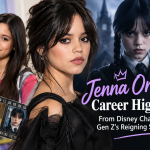




Most child stars face a fairly predictable ceiling — a few good years in the spotlight, followed by a long, difficult stretch trying to convince audiences and casting directors to take them seriously as adults. Zendaya’s career has followed almost the opposite pattern. At not yet 30, she’s already built one of the more carefully managed, consistently ascending careers in modern Hollywood, moving from Disney Channel to two Emmy wins to leading roles across some of the industry’s biggest franchises, without the usual messy transition period in between that trips up so many former teen stars.
Here’s how that timeline actually unfolded, year by year, and what made it work when so many similar early starts don’t.
Early Beginnings: Modeling Before Acting
Before acting ever entered the picture, Zendaya Maree Stoermer Coleman, born September 1, 1996, in Oakland, California, started in front of the camera as a child model, working with retail brands like Macy’s and Old Navy starting around age 12. Her parents, both educators — her mother Claire Stoermer and father Kazembe Ajamu — placed a consistent emphasis on staying grounded and education-focused even as her early career opportunities began to expand, a foundation she’s credited repeatedly for helping her avoid some of the more common pitfalls that affect child performers.
2010: The Disney Channel Breakthrough
Zendaya’s actual breakthrough arrived in 2010, at just 13 years old, when she joined the cast of Disney Channel‘s Shake It Up, playing Rocky Blue, a talented young dancer with a distinct personality. The show ran until 2013, making her one of the youngest leads in the network’s lineup at the time, and gave her a national platform most actors her age could only dream of.
What’s notable in hindsight is that even during this stage, by her own account, she was already thinking beyond simply enjoying teen fame — treating the opportunity as a foundation to build a longer, more deliberate career rather than an end in itself.
2015: Taking Creative Control Earlier Than Expected
At 18, Zendaya landed her own headlining Disney Channel series, K.C. Undercover, playing K.C. Cooper, a teenage spy. What made this role different from a typical follow-up teen vehicle was that she also served as an executive producer on the series — an unusually advanced level of creative involvement for someone still a teenager, and an early sign of the strategic, long-term thinking that would come to define her career choices going forward.
2017: The Marvel Turning Point
Zendaya’s transition from Disney star toward mainstream A-list territory accelerated significantly in 2017, when she joined the Marvel Cinematic Universe as MJ in Spider-Man: Homecoming, opposite Tom Holland. It was on this film’s set that she and Holland first met, beginning both a professional partnership across multiple Spider-Man films and, eventually, a much-discussed personal relationship that the two have kept notably private despite intense public interest.
The Spider-Man franchise gave Zendaya exposure to a completely different scale of audience than her Disney Channel work had, positioning her within one of the biggest commercial franchises in modern film while she simultaneously began pursuing more serious, adult-oriented dramatic work elsewhere.
2019: Euphoria and Historic Emmy Recognition
If there’s a single project responsible for fully repositioning how the industry and audiences saw Zendaya, it’s HBO’s Euphoria, which premiered in 2019. Playing Rue Bennett, a teenager navigating addiction and mental health struggles, Zendaya delivered a performance with an emotional rawness far removed from anything in her Disney Channel work, immediately establishing her as a serious dramatic actress rather than a former teen star testing the waters of more mature material.
The role earned her a Primetime Emmy Award for Outstanding Lead Actress in a Drama Series in 2020, making her, at the time, the youngest woman ever to win in that category — a genuinely historic milestone. She won the award again in 2022, becoming a two-time Emmy winner for the same role and cementing Euphoria as the project that transformed her from a well-liked former child star into one of the most respected dramatic actresses of her generation.
2021: Malcolm & Marie and Dune
Zendaya continued building dramatic credibility with Malcolm & Marie in 2021, a tightly focused two-hander drama that gave her space to carry a film almost entirely through dialogue and emotional nuance. That same period saw her join Denis Villeneuve’s Dune as Chani, opposite Timothée Chalamet, in what would become one of the most celebrated science-fiction franchises of the decade.
Dune: Part One and its 2024 follow-up, Dune: Part Two, expanded Zendaya’s role significantly, giving her a much larger presence in the story’s second installment and further establishing her as a lead capable of anchoring massive, big-budget productions alongside her more intimate dramatic work.
2023: Golden Globe Recognition and Continued Momentum
Zendaya’s work on Euphoria also earned her a Golden Globe Award for Best Actress in a TV Drama in 2023, adding to a growing collection of major industry recognition that spanned both television and film simultaneously — a fairly rare combination for an actress still in her twenties.
2024: Challengers and Range as a Producer
In 2024, Zendaya starred in Challengers, a romantic drama centered on the complicated relationship between a trio of tennis players. The role showcased yet another register — physically demanding, morally ambiguous, and built around a character considerably less sympathetic than Rue Bennett — further demonstrating the range she’d built since her Disney Channel days.
Alongside her acting credits, Zendaya has increasingly taken on producing roles across her projects, reflecting a broader career strategy that mirrors the early creative involvement she showed as a teenager on K.C. Undercover — treating her career as something to actively architect rather than simply react to as opportunities arrive.
2026: A Career-Defining Year
By 2026, Zendaya’s career had reached a genuinely unusual level of simultaneous activity across multiple major franchises and prestige projects. She appeared opposite Robert Pattinson in the dark romantic comedy The Drama, joined the ensemble cast of Christopher Nolan’s highly anticipated The Odyssey alongside Matt Damon, Tom Holland, Anne Hathaway, and others, and returned as Chani in Dune: Part Three. She also joined the cast of Shrek 5, playing Shrek’s daughter — a role confirmed in a widely shared teaser announcement that generated significant online buzz, given how far removed it is from her usual dramatic work.
Euphoria also returned for its long-awaited third season in 2026 after a significant gap between seasons, with Zendaya once again central to a show that had remained deeply embedded in pop culture conversation despite years off the air.
Marriage and Personal Milestones
In March 2026, Zendaya’s longtime stylist Law Roach revealed that she and Tom Holland had married, a claim Holland later appeared to confirm in an interview published in Esquire, referencing his family’s attendance at the event. The couple, who met on the set of Spider-Man: Homecoming in 2017, have remained notably private about their relationship throughout its nearly decade-long arc, rarely using it for public promotion despite the enormous ongoing interest in their partnership.
Building Wealth Alongside Fame
By 2026, Zendaya’s estimated net worth had reached roughly $40 million, a figure reflecting far more than acting salaries alone. Her income now spans television and film roles, producing credits, music royalties, and a substantial portfolio of endorsement and luxury fashion partnerships, including collaborations with brands like Louis Vuitton and Bulgari. That diversified financial foundation, built steadily over roughly seventeen years since her earliest modeling work, reflects the same long-term, strategic approach that’s defined her career choices more broadly, extending well beyond simply cashing paychecks from acting roles as her profile has grown.
Fashion Icon Status
Beyond acting, Zendaya has become one of the entertainment industry’s most consistently recognized fashion figures, known for distinctive red carpet choices at premieres, fashion weeks, and award shows that regularly generate coverage well beyond typical film press. That fashion presence has become genuinely inseparable from her broader public identity, functioning as its own parallel career alongside her acting work, complete with brand partnerships and campaign work that runs independently of whatever film or show she happens to be promoting at a given moment.
A Complicated Relationship With Her Own Early Fame
Despite the largely smooth trajectory of her career, Zendaya has been candid about the difficulties of becoming famous as a young teenager. She’s described having a complicated relationship with the concept of child acting more broadly, noting she’s seen firsthand how damaging it can be for young performers who aren’t given the right support structures. That perspective, shaped by her own experience rising to fame at 14, has informed how she’s approached mentoring and public commentary around child stardom in the years since.
Why Her Timeline Stands Out
Looking at the full arc, what separates Zendaya’s trajectory from many other former child stars isn’t the presence of a single lucky break — it’s the consistency of deliberate, well-timed choices across nearly two decades. Disney Channel provided visibility. Marvel provided franchise-scale exposure. Euphoria provided dramatic credibility and historic awards recognition. Dune provided access to prestige science-fiction filmmaking. Each stage built on the last rather than replacing it, and she’s continued adding new registers, including outright comedy in Shrek 5, well into her established stardom rather than settling into a single defined lane.
For younger actors navigating their own early fame, her career has increasingly functioned as something of a blueprint for how to move from teen stardom into lasting adult credibility without the identity crisis or extended career gap that affects so many former child performers.
Comparing Her Path to Other Former Child Stars
It’s worth placing Zendaya’s trajectory alongside other well-known former child stars to appreciate just how uncommon her outcome has been. Many young performers who achieve fame through a children’s network face a difficult, sometimes years-long stretch trying to shed that earlier image, occasionally struggling publicly with the transition in ways that become part of their broader public narrative. Some manage a successful pivot into adult roles but never quite recapture the scale of their earlier fame; others step away from the industry altogether.
Zendaya’s path avoided both outcomes almost entirely. Rather than a difficult, visible struggle to be taken seriously, her transition into adult, dramatically demanding work through Euphoria was met with immediate critical acclaim and historic awards recognition, with barely any gap between her teen-oriented projects and roles considered serious dramatic work by major awards bodies. That smoothness is genuinely rare, and it’s a large part of why her career gets referenced so often as a model for how the transition can be handled well.
The Role of Strategic Career Choices
A recurring theme throughout Zendaya’s timeline is the deliberateness behind her project selections. Rather than accepting every opportunity that came with her rising profile, she’s spoken about being selective, watching how other actors navigated similar transitions, and consciously choosing to stay authentic to her own instincts rather than following an established playbook. That selectivity shows up clearly in the pattern of her choices — moving from a Disney Channel lead role directly into an executive producer credit on her next series while still a teenager, then following Marvel’s blockbuster visibility with the far riskier, more emotionally demanding Euphoria rather than doubling down on franchise work exclusively.
This kind of deliberate pacing, alternating between commercially safe, high-visibility projects and creatively risky, prestige-oriented ones, mirrors a pattern seen in a handful of the most successful actors of her generation, though few have executed it this consistently from such a young age.
Balancing Franchise Work With Prestige Projects
By 2026, Zendaya had built a genuinely rare dual career, simultaneously anchoring one of cinema’s most significant ongoing science-fiction franchises through Dune while also carrying one of television’s most culturally significant dramas through Euphoria. Very few actors manage to hold both types of stardom at once without one eventually crowding out the other, and her ability to keep expanding into new territory — an ensemble prestige epic with Christopher Nolan, an outright animated comedy with Shrek 5 — while maintaining both of her existing major franchises speaks to an unusually well-managed career trajectory.
Advocacy and Public Platform
Beyond her filmography, Zendaya has used her public platform to support causes related to racial justice, gender equality, and mental health, treating her visibility as a tool for advocacy work rather than purely a vehicle for her own career. That combination of substantial commercial success and consistent, values-driven public engagement has contributed to a public image that extends well beyond her work on screen, reinforcing the sense that her career has been built with long-term intention rather than simply capitalizing on whatever opportunity was most immediately available.
What Comes Next
With Dune: Part Three, The Odyssey, Spider-Man: Brand New Day, Shrek 5, and a new season of Euphoria all landing around the same period, 2026 represents an unusually concentrated stretch even by Zendaya’s already fast-moving standards. Rather than a single defining project, her career at this stage looks more like a portfolio deliberately spread across genres, tones, and audiences — animated family comedy sitting alongside prestige literary adaptation, ongoing franchise work sitting alongside a long-running television drama finally getting its long-awaited continuation after years off the air.
That breadth suggests her approach going forward will likely continue the same pattern that’s defined her career since her Disney Channel days: rather than settling into a single identity as either a franchise lead or a prestige dramatic actress, continuing to hold both simultaneously, adding new registers as opportunities arise rather than narrowing her focus as her fame has grown.
Conclusion
Zendaya’s rise to fame wasn’t a single dramatic moment — it was a carefully built sequence of deliberate steps stretching back to modeling work at age 12, each one expanding her range and credibility rather than simply extending her visibility. From Shake It Up to two historic Emmy wins for Euphoria, to anchoring Dune alongside Timothée Chalamet and joining Christopher Nolan’s The Odyssey, her timeline reflects an unusually consistent pattern of strategic, well-timed choices across nearly seventeen years.
At not yet 30, with a net worth approaching $40 million, a marriage to a fellow former co-star, and a 2026 slate spanning prestige drama, blockbuster franchises, and outright family comedy, Zendaya has built a career that increasingly reads less like a lucky continuation of childhood fame and more like a genuinely rare success story built on consistent, deliberate effort. For anyone watching how a career actually gets built over nearly two decades, rather than how it’s often summarized after the fact, her timeline offers a fairly rare example of early promise translating into sustained, expanding relevance rather than a brief peak followed by a long, quiet fade.
A Timeline Still Being Written
Unlike many biographical pieces looking back on a completed career, writing about Zendaya’s rise to fame means describing a story that’s still very actively unfolding. With multiple major releases still ahead in 2026 alone and no clear sign of her pace slowing down, the timeline covered here represents a snapshot of an unusually productive stretch rather than a finished arc. Given the consistency of her choices so far, it’s a reasonable bet that whatever comes next will continue expanding her range rather than settling comfortably into whatever’s already worked.
Frequently Asked Questions
What was Zendaya’s first major acting role? She joined the cast of Disney Channel’s Shake It Up in 2010 at age 13, playing Rocky Blue, which served as her breakthrough into acting after starting as a child model.
How many Emmy Awards has Zendaya won? She has won two Primetime Emmy Awards for Outstanding Lead Actress in a Drama Series for her role as Rue Bennett in HBO’s Euphoria, in 2020 and 2022, making her the youngest woman to win in that category at the time of her first win.
What role does Zendaya play in the Dune franchise? She plays Chani opposite Timothée Chalamet in Denis Villeneuve’s Dune trilogy, with her role expanding significantly between Dune: Part One (2021) and Dune: Part Two (2024).
Is Zendaya married to Tom Holland? Reports in March 2026 indicated the two had married, a claim later appeared to be confirmed by Holland in an interview with Esquire. The couple met filming Spider-Man: Homecoming in 2017 and have kept their relationship largely private since.
What is Zendaya’s estimated net worth? As of 2026, her estimated net worth is commonly placed around $40 million, built through acting roles, producing credits, music royalties, and endorsement and fashion partnerships.
What new projects is Zendaya working on in 2026? Her 2026 slate includes Dune: Part Three, Christopher Nolan’s The Odyssey, Shrek 5, The Drama, and the long-awaited third season of Euphoria.
Did Zendaya struggle with fame as a child star? She has spoken candidly about having a complicated relationship with child acting, noting she has seen how detrimental early fame can be for young performers without the right support, drawing on her own experience becoming famous at 14.
What is Zendaya’s role in Christopher Nolan’s The Odyssey? She joined the ensemble cast alongside Matt Damon, Tom Holland, Anne Hathaway, and Robert Pattinson, with the film’s world premiere held in London in July 2026, marking one of her most high-profile prestige ensemble projects to date and a notable departure from the franchise and dramatic television work that had defined much of her career up to that point.
How did Zendaya transition from Disney Channel to serious dramatic roles? Her role as Rue Bennett in HBO’s Euphoria, starting in 2019, is widely considered the project that shifted public and industry perception of her from a former teen star into a serious dramatic actress, earning her two Primetime Emmy Awards for the role.
What is Zendaya’s connection to Timothée Chalamet’s career? The two have starred together as the lead pair in Denis Villeneuve’s Dune trilogy, with Zendaya playing Chani opposite Chalamet’s Paul Atreides across Dune: Part One, Dune: Part Two, and the upcoming Dune: Part Three.