







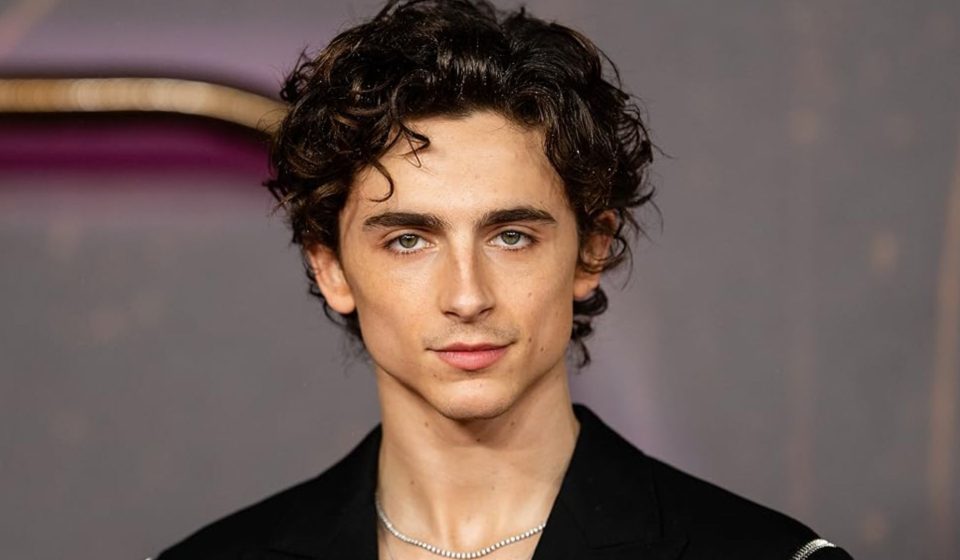

There’s a version of modern stardom that follows a fairly predictable script: land a franchise, ride it for a decade, occasionally stretch into something “serious” to remind everyone you can act. Timothée Chalamet has spent his entire career actively avoiding that script, and at 30 years old, with three Best Actor Oscar nominations already behind him, that refusal to play it safe looks less like a risk and more like the actual reason he’s become one of the defining actors of his generation, rather than simply one of its most commercially successful.
Here’s how he built that career, from a bilingual childhood in Manhattan to leading both intimate indie dramas and billion-dollar franchises within the same few years, without ever fully settling into either category alone.
Early Life: A Childhood Built Around Performance
Timothée Hal Chalamet was born on December 27, 1995, in Manhattan, New York City, to a French father and an American mother, giving him a bilingual upbringing that would later become part of his public identity and cultural appeal. His mother, Nicole Flender, spent years as a Broadway dancer before moving into real estate, and his father, Marc Chalamet, built a career as a journalist and editor. Growing up surrounded by performance and storytelling in one form or another made an early pull toward acting almost unsurprising in hindsight.
He attended the Fiorello H. LaGuardia High School of Music & Art and Performing Arts in New York City — the same school that’s produced a long list of notable performers over the decades — where his interest in acting deepened through formal training in theatre. After high school, he briefly studied cultural anthropology at Columbia University and later at NYU’s Gallatin School before ultimately stepping away from a traditional degree path to commit fully to acting.
The Slow Build Before the Breakout
Chalamet’s earliest professional credits were small — brief appearances in television and minor film roles that gave him experience without offering much visibility. This part of his story sometimes gets glossed over in favor of the breakout that followed, but it matters: years of acting classes, auditions, and steady, unglamorous groundwork went into the years before international recognition arrived. Success, in his case, didn’t arrive from a single lucky discovery — it followed a fairly conventional period of training and small roles that most working actors go through.
Call Me by Your Name: The Breakthrough
The turning point came in 2017, with Luca Guadagnino’s Call Me by Your Name. Playing Elio, a teenager navigating a formative summer romance in northern Italy, Chalamet delivered a performance built on subtlety and emotional exposure that immediately set him apart from most young actors working at the time. The role earned him an Academy Award nomination for Best Actor at just 22 years old, making him one of the youngest nominees in that category in decades.
That nomination did more than validate his talent — it fundamentally repositioned how the industry saw him. Almost overnight, he went from a promising newcomer to an actor studios and prestige directors alike actively wanted to work with, a shift that opened the door to the unusually varied career that followed.
Building Range Through Deliberate Choices
Rather than chasing a second version of the same acclaimed indie-drama success, Chalamet’s choices after Call Me by Your Name moved in several different directions at once. He appeared in Greta Gerwig’s Lady Bird the same year, showing he could work within an ensemble rather than only carrying a film alone. He took on Beautiful Boy, playing a young man struggling with addiction, a considerably darker and more physically demanding role than anything he’d done before. He joined Gerwig again for her 2019 adaptation of Little Women, showcasing a lighter, more comedic register within a period piece.
This pattern — moving deliberately between genres, tones, and types of projects rather than settling into a comfortable niche — became one of the defining features of how Chalamet built his career, and it’s a big part of why he’s avoided the typecasting that limits many actors who break out through a single iconic early role.
Dune: Becoming a Blockbuster Lead
In 2021, Chalamet took on his biggest commercial gamble yet: leading Denis Villeneuve’s Dune as Paul Atreides, a role at the center of a massive science-fiction franchise built on Frank Herbert’s dense source material. Dune: Part One became a critical and commercial success, and Dune: Part Two followed in 2024, deepening Paul’s arc into a more psychologically burdened, morally complicated figure as the story progressed. A third installment, Dune: Part Three, is expected in December 2026, meaning Chalamet has now anchored one of the most significant science-fiction franchises of the current era across multiple years.
What made this transition notable wasn’t just the scale of the films — it was that Chalamet managed to become a genuine blockbuster lead without abandoning the smaller, riskier prestige projects that built his reputation in the first place.
Wonka and Musical Range
In 2023, Chalamet took on an entirely different kind of challenge, starring as a young Willy Wonka in Wonka, a musical prequel requiring singing, dancing, and a tone closer to family-friendly whimsy than anything in his filmography up to that point. The film performed well commercially and demonstrated yet another register he could convincingly occupy, reinforcing the pattern of an actor actively resisting being defined by any single type of role.
A Complete Unknown: Playing Bob Dylan
Chalamet’s role as Bob Dylan in A Complete Unknown, released in late 2024 and into early 2025, became one of the most demanding transformations of his career, requiring him to learn to sing and play guitar convincingly in Dylan’s own style rather than relying on lip-syncing or a vocal double. The performance earned him another wave of major awards attention and reinforced his standing as an actor willing to fully immerse himself in a role rather than approach it from a safe distance.
Marty Supreme: Continuing the Pattern of Reinvention
Only months after A Complete Unknown, Chalamet moved into an entirely different physical and tonal challenge with Marty Supreme, a sports comedy-drama in which he plays a professional table tennis player loosely inspired by real-life ping pong champion Marty Reisman. To prepare, he studied real table tennis legends and found an unexpected connection between their footwork and dance — describing the sport’s movements as surprisingly balletic once he’d spent enough time watching it closely.
His goal with the role, in his own words, was to balance the competitive intensity of sports greats like Mike Tyson and Michael Jordan with the physical grace of a George Balanchine or Mikhail Baryshnikov. That performance earned him a Critics Choice Award for Best Actor in January 2026, extending an unusually consistent run of acclaimed performances across wildly different kinds of roles in a short span of time.
Why His Career Pattern Stands Out
Looking at the full arc, a clear pattern emerges: Chalamet has consistently alternated between small, character-driven prestige films and massive commercial franchises, refusing to let either category define him exclusively. Dune sits alongside Call Me by Your Name. Wonka sits alongside A Complete Unknown. Marty Supreme follows immediately after a biopic requiring him to essentially reinvent Bob Dylan’s voice and mannerisms from scratch.
Very few actors of his generation have managed to maintain credibility in both spaces simultaneously rather than eventually being absorbed entirely into big-budget franchise work or, alternatively, staying confined to smaller festival-circuit films. That dual credibility is arguably the single most distinctive feature of his career so far.
Awards Recognition and Industry Standing
Chalamet has now received three Best Actor Oscar nominations, an unusually high number for an actor still in his twenties and early thirties, placing him among the youngest performers in modern Hollywood history to reach that count. Alongside his Academy Award nominations, he’s picked up a Critics Choice Award and multiple other industry honors across his career, reflecting sustained critical respect rather than a single acclaimed moment followed by diminishing returns.
Public Persona and Cultural Presence
Beyond his filmography, Chalamet has become a notable figure in fashion and popular culture more broadly, known for distinctive red carpet choices that regularly generate discussion well beyond typical film press coverage. He’s also been in a relationship with Kylie Jenner since 2023, with the couple making joint public appearances at major awards ceremonies, though Chalamet has generally kept his public commentary focused on his work rather than his personal life.
That combination — genuine critical acclaim, blockbuster box office success, and a distinctive cultural presence outside of acting itself — has helped position him as one of the more culturally significant actors of his generation, often described as leading what’s been called a “Chalamet Renaissance” in how a young leading man can build a career in the current Hollywood landscape.
What His Journey Teaches About Building a Lasting Career
Stepping back from the specific roles, there’s a clear throughline in how Chalamet has approached his career: prioritizing artistic range over repeating a proven formula, and treating early acclaim as a foundation to build on rather than a specific lane to stay within. Rather than accepting similar roles repeatedly once Call Me by Your Name proved successful, he moved confidently between intimate dramas, science-fiction epics, musicals, and biographical films, a willingness to embrace uncertainty that expanded both his range as a performer and the size of his audience.
That approach carries a broader lesson relevant well beyond acting: sustainable, long-term success tends to be built through deliberate variety and calculated risk-taking rather than repeating whatever worked once. Chalamet’s career, at least so far, suggests that formula holds up well, and it offers a useful contrast to the more common path of leaning entirely on whatever brought early recognition in the first place.
The Weight of a Nomination at 22
It’s worth pausing on just how unusual Chalamet’s early trajectory actually was. Being nominated for Best Actor at 22 places enormous pressure on a young performer — the industry and audiences alike start expecting every subsequent choice to either confirm or contradict that early promise. Plenty of young actors who receive that kind of attention early struggle with what comes next, either chasing safer, more commercial roles to capitalize on the moment or disappearing into obscurity when the follow-up projects don’t land with the same impact.
Chalamet’s response was neither. He didn’t rush into an obvious commercial cash-in, and he didn’t retreat into smaller, safer work either. Instead, he used the visibility from Call Me by Your Name to get access to a wider range of scripts and directors, then made a series of choices that actively worked against typecasting rather than reinforcing whatever made him famous in the first place.
Comparing His Path to Other Young Best Actor Nominees
Looking at other actors who received major nominations at a similarly young age offers useful context for how rare Chalamet’s sustained trajectory actually is. Many young nominees see a single acclaimed performance followed by a long stretch of more forgettable work, or a pivot entirely away from the type of role that earned them recognition in the first place, sometimes toward safer commercial fare that trades critical respect for box office reliability.
What sets Chalamet apart is the consistency of acclaim across nearly a decade since his first nomination, spanning genres as different as an intimate romantic drama, a big-budget science-fiction epic, a family-friendly musical, and a music biopic requiring him to essentially become another real historical figure on screen. Sustaining that level of critical respect across such different types of projects, without a clear dip in quality or public perception, is genuinely uncommon among actors who broke out this young.
The Physical and Vocal Transformations Behind His Roles
A recurring feature of Chalamet’s more demanding roles is his willingness to undergo significant physical or technical preparation rather than relying purely on natural charisma. For A Complete Unknown, that meant months of vocal and guitar training to convincingly replicate Bob Dylan’s specific style rather than a generic approximation. For Marty Supreme, it meant studying real table tennis champions closely enough to draw an unexpected parallel between competitive sports movement and dance choreography, then playing full matches during filming to authentically convey the sport’s physical demands.
This pattern of genuine, hands-on preparation — rather than surface-level imitation — has become one of the more consistently praised aspects of his work by critics and collaborators, and it’s part of why his performances in based-on-real-events roles tend to be received as convincing rather than simply a recognizable actor doing an impression.
How Dune Changed the Scale of His Career
It’s worth separating out just how significant a gamble Dune represented at the time Chalamet signed on. Frank Herbert’s source material had a famously difficult production history, including a well-documented failed adaptation attempt decades earlier, and taking on the lead role in a new attempt to bring it to screen carried real risk for an actor previously known mostly for smaller, character-driven work.
The success of Dune: Part One and the continuation into Part Two didn’t just add a franchise to his résumé — it fundamentally changed the scale of projects he could plausibly lead, opening doors to significant studio investment that typically isn’t available to actors known primarily for festival-circuit dramas. That expanded scale, combined with his continued willingness to take on smaller prestige projects in between franchise installments, is a large part of why his career now spans both ends of the industry simultaneously rather than settling into just one.
Conclusion
Timothée Chalamet’s career journey doesn’t follow the typical trajectory of a young star who breaks out early and then spends the following decade playing it safe. From a theatre-trained upbringing in New York City through an Oscar-nominated breakout at 22, and into a decade of alternating between prestige dramas and blockbuster franchises, his path has been defined by a consistent refusal to be boxed into a single type of role.
At 30, with three Oscar nominations, a lead role in one of the biggest science-fiction franchises currently running, and acclaimed performances ranging from a musical prequel to a Bob Dylan biopic to a sports drama, Chalamet has built a career that looks less like a lucky streak and more like a deliberate, ongoing strategy — one built on artistic risk-taking that, so far, has consistently paid off. As Dune: Part Three approaches and his filmography continues expanding into new territory, there’s little indication that pattern of deliberate reinvention is likely to slow down anytime soon.
A Career Still in Motion
What makes writing about Chalamet’s career journey slightly unusual compared to many biography pieces is that he’s still very clearly in the middle of it, not looking back on a finished body of work. With Dune: Part Three still to come, and a track record of consistently choosing unexpected next projects rather than predictable follow-ups, it’s genuinely difficult to guess what direction he’ll take next — which, for an actor who has built his entire reputation on avoiding predictability, seems like exactly the point.
What was Timothée Chalamet’s breakout role? His performance as Elio in Call Me by Your Name (2017) is widely considered his breakout role, earning him an Academy Award nomination for Best Actor at age 22.
How many Oscar nominations does Timothée Chalamet have? As of 2026, he has received three Best Actor Oscar nominations, making him one of the youngest actors in modern Hollywood to reach that count across such a relatively short span of his career so far.
What is Timothée Chalamet’s most famous franchise role? He plays Paul Atreides in Denis Villeneuve’s Dune trilogy, including Dune: Part One (2021), Dune: Part Two (2024), and the upcoming Dune: Part Three, expected in December 2026, marking one of the most significant science-fiction franchise roles of his generation.
Did Timothée Chalamet really sing and play guitar for A Complete Unknown? Yes, he learned to sing and play guitar in Bob Dylan’s own style for the role, rather than relying on a vocal double or lip-syncing, as part of an extensive months-long transformation process for the film that critics widely praised as convincing rather than a surface-level impression.
What is Timothée Chalamet’s educational background? He attended the Fiorello H. LaGuardia High School of Music & Art and Performing Arts, and briefly studied cultural anthropology at Columbia University and NYU’s Gallatin School before leaving to focus on acting full-time, a decision that ultimately shaped the rest of his career path.
What genres has Timothée Chalamet worked in? His filmography spans intimate independent dramas, ensemble films, a musical prequel, a science-fiction epic franchise, a musical biopic, and a sports comedy-drama, reflecting an unusually wide range for an actor of his generation compared to many peers who break out through a single defined genre.
Is Timothée Chalamet in a relationship? He has been in a relationship with Kylie Jenner since 2023, with the couple making joint public appearances at major awards shows, though he has largely kept his public commentary centered on his career rather than his personal life.
How did Timothée Chalamet prepare for his role in Marty Supreme? He studied real table tennis champions, including the player his character was loosely based on, and played full matches during filming to authentically capture the sport’s physical demands, drawing an unexpected connection between competitive table tennis footwork and dance.
What makes Timothée Chalamet different from other actors of his generation? His willingness to alternate consistently between small, character-driven prestige films and large-scale commercial franchises, rather than settling into either category exclusively, is widely seen as one of the more distinctive patterns in his career compared to his peers.
Has Timothée Chalamet won any major acting awards? Yes, alongside three Academy Award nominations, he has won a Critics Choice Award for Best Actor and received several other industry honors across his career for his performances.